
Vermont Seasonal Employee Payroll 2026: Tips for Managing Temporary Workers Efficiently
Date Released
09 April, 2026
Handling payroll taxes and compliance for seasonal workers in Vermont has been challenging from the beginning. With employees that come and go depending on business cycles, complying with state and federal tax laws and calculating wages can be difficult. Vermont seasonal employee payroll will need special consideration in 2026, given the new payroll tax regulations and compliance requirements. This article provides key considerations to help you manage payroll taxes and compliance for seasonal workers in Vermont effectively.
Understanding Vermont Seasonal Employee Payroll
Temporary workers are employees hired to meet labor shortages during a specific period, such as agricultural businesses, tourism companies, hotels, resorts, or other organizations. Unlike regular employees who perform tasks continuously, seasonal workers have irregular working hours, making their payroll tax calculation more complicated. Understanding the rules for Vermont seasonal payroll will help avoid penalties.
Compliance with Vermont seasonal payroll includes calculating state income tax withholding, unemployment insurance premiums, and quarterly payroll reporting for temporary employees. Companies must distinguish between independent contractors and temporary employees to prevent audits and fines.
Key Employer Responsibilities for Seasonal Workers
As an employer handling the payroll of temporary workers in Vermont, you will need to ensure that you:
- Correctly Classify Employees: You will first need to classify the seasonal employees either as employees or independent contractors.
- Tax Deduction: You will need to withhold taxes from the temporary workers' payroll for the Vermont state income tax, Social Security, Medicare, and the federal income tax. It is necessary to do this correctly to prevent underpayment of taxes.
- Contribution to Unemployment Insurance: The employers are supposed to contribute to the unemployment insurance fund for the seasonal employees.
- Filing Reports on Payroll: Filing timely reports on the payroll and taxes is crucial to staying compliant.
- Keep Records: Keeping records of the number of hours worked by the employees and tax deducted is essential.
Seasonal Employee Payroll Compliance Checklist 2026
The following checklist can help businesses optimize their seasonal payroll processing:
This checklist helps avoid some payroll mistakes associated with temporary employees, such as improper employee classification and incorrect taxation issues.
Best Practices for Seasonal Workforce Payroll Management
1. Plan Payroll According to Seasonal Cycles
Identify high seasons and synchronize your payroll plan considering the number of employees. For small business seasonal payroll strategies, the state of Vermont has special considerations when it comes to hourly wages, bonuses, and overtime.
2. Automate Payroll for Temporary Employees
Make sure that your payroll software includes the necessary functions to process seasonal payroll for temporary workers. In this case, all payments will be processed automatically, which means no human errors and saving the time of your HR managers.
3. Understand Vermont Payroll Tax Rules for Seasonal Workers
In the state of Vermont, there are certain laws regarding payroll taxation related to temporary workers. This may include various income taxes, contributions to unemployment insurance, etc. It is advisable to follow those rules closely.
4. Provide Clear Communication to Temporary Staff
It is crucial to communicate all the important information regarding payment terms with your temporary workers in advance to prevent misunderstandings in the future.
5. Regularly Audit Payroll Processes
Internal auditing must be done to ensure that there are no discrepancies in terms of tax withholdings and wage calculations. The seasonal employee payroll compliance checklist must be checked at least every quarter.
6. Keep Track of Payroll Deadlines
Hiring seasonals is known to shorten the time frame for payroll. Setting specific timelines for payday and payroll deadlines can prevent penalties due to filing too late or missing deadlines.
7. Train HR Staff on Temporary Employee Payroll
HR personnel need training on payroll management when they hire seasonals because they must be aware of how the temporary employment payroll works.
8. Leverage Employee Self-Service Portals
Self-service employee portals are part of payroll software packages that make the lives of HR much easier by giving temporary employees access to information about their payments and other issues.
Payroll Tips for Temporary Workers and Seasonal Staff
- Payroll Intervals: Although the working hours may be inconsistent, payroll intervals should remain consistent for seasonal staff.
- Overtime Calculations: Under Vermont’s labor legislation, overtime calculation for the qualifying temporary staff is necessary.
- Staff with Multiple Employment: Many temporary staff work in different jobs for varying durations; it is vital to record payroll correctly for tax purposes.
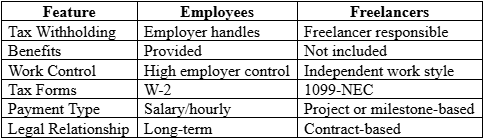
- IRS Regulations: The payroll records need to comply with IRS regulations for tax forms, including either Form W-2 or 1099-NEC.
- Confidentiality and Recordkeeping: Tax forms, payslips, and employment contracts must be kept confidential to safeguard private data and ensure compliance.
Handling Taxes for Seasonal Employees in Vermont
Proper tax calculation for seasonal employees can be very difficult for employers in Vermont, involving:
- Federal Tax: This depends on W-4 forms completed by the employee.
- State Income Tax: This includes Vermont withholding, which depends on individual exemptions.
- Social Security & Medicare: This applies to the employment of individuals, not those who are independent contractors.
- Contribution to Unemployment Insurance: This contribution is mandatory for the employer.
In order to avoid mistakes, payroll systems or consultation with an accountant may prove useful.
Common Payroll Mistakes with Temporary Workers
Seasoned employers can also commit blunders in their management of the seasonal payroll. To avoid these mistakes, be wary of:
- Misclassifying Employees: Mistaking an employee as an independent contractor causes audits and fines.
- Timing Issues in Payroll Taxes: Late payments are fined along with additional interest.
- Overtime Calculations Error: Due to irregular scheduling in seasonality, calculating overtime can become complicated.
- Inadequate Recordkeeping: Poor recordkeeping increases problems in audit preparation.
- Overlooking Special State Requirements: The payroll tax requirements for Vermont's seasonal employees are different from federal ones.
Conclusion
To properly manage seasonal worker payroll for 2026, a number of important actions should be taken into consideration. Understanding tax and payment obligations at the state and federal level, using automation systems for payroll processing, and keeping meticulous records are some ways through which this problem can be approached. Other tips include using checklists for seasonal compliance, training HR personnel, and implementing payroll technology.
As such, managing Vermont seasonal employee payroll is important for any employer, especially in 2026. Proper knowledge of the payroll obligations, coupled with automation, could make the whole process easier for any business organization.
Take control of your seasonal employee payroll in Vermont right now. Learn more about how PayProNext can automate your payroll process and ensure compliance.