

Real-Time Payroll Analytics: Turning Salary Data Into Strategic Business Insights
Date Released
17 November, 2025
Introduction: Payroll is no longer about paying people.
Payroll was formerly a back-office operation- calculate hours, pay, remit taxes, and continue. However, in the future (2025 and beyond), payroll has become one of the most efficient sources of real-time business intelligence. Payroll insights are now being used by companies today to enhance financial planning, labor spending optimization, measuring performance, and making smarter strategic decisions.
The trend of real-time payroll analytics has increased day by day, and the confidential data of wages is more than just numbers; it has become the basis of your organization's day-to-day operations. Businesses will now be able to monitor spikes of overtime, labor costs per department, tax exposure, pay equity, productivity trends, and compliance risks as they occur, rather than a few weeks afterward.
This blog describes the functionality of real-time payroll analytics, why it is important, and how it can help small and medium-sized businesses make salary data their competitive edge.
1. What Is Real-Time Payroll Analytics?
Real-time payroll analytics can be described as the leverage of live payroll information such as wages, taxes, hours worked, overtime, benefits, deductions, job position, and so on to create immediate and operational information.
Payroll analytics systems incorporated today offer:
- Live salary dashboards
- On-demand labor cost reporting
- Real-time compliance alerts
- Predictive forecasting models
- Automated anomaly detection
Businesses are able to see what is going on immediately instead of waiting until the end of the month to get the summaries.
Real-Time Payroll Insights Examples
- Over time peaks that occurred this week.
- Teams exceeding labor budgets
- Employees reaching tax or benefits thresholds
- Cost-per-employee per department
- Promptly alerts to any inconsistency in payroll.
- Real-time data on productivity and attendance.
This shift from “payroll processing” to “payroll intelligence” gives leadership visibility they’ve never had before.
2. Why Real-Time Payroll Analytics Matters Today
Labor is the most important cost to most business operations, as it amounts to 50-70 percent of the overall operating expenses. However, a lot of companies continue to base their big staffing and financial choices on weeks or months-old payroll information.
Real-time payroll analytics changes that entirely.
A. Real-Time Labor Cost Visibility
Leaders can monitor:
- Total payroll spend
- Overtime costs
- Contractor vs employee expenses
- Cost per department
This will allow early identification of cost increases and inefficiencies in staffing.
B. Stronger Workforce Planning
The answers to the questions that Payroll analytics answers are:
- Are we overstaffed or understaffed?
- What is the most valuable department per dollar expended on?
- Should we hire full-time staff or contract workers?
- Where is overtime avoidable?
The result of this is more precise budgeting and hiring.
C. Improved HR and Executive Decision-Making
Payroll analytics will enable HR to have access to:
- Pay equity gaps
- Turnover trends
- Absenteeism patterns
- Role-based performance insights
The executives are able to have more insight into the workforce productivity and cost allocation.
D. Better Compliance & Risk Protection
Real-time analytics assists companies to identify in the moment:
- Miscalculated overtime
- Missing wage data
- Incorrect classifications (W-2 vs 1099)
- Payroll tax anomalies
- State-specific compliance issues
This is invaluable to states such as California, which have strict laws on payroll that are in constant flux.
3. Key Payroll Metrics Every Business Should Track
To get maximum benefits from payroll analytics, it's important to monitor:
1. Total Labor Cost (TLC)
Wages + taxes + overtime + benefits + bonuses.
2. Overtime Percentage
Shows where labor inefficiencies or understaffing exist.
3. Payroll Error Rate
Indicates how much time and money are wasted correcting mistakes.
4. Cost Per Employee
Important and helpful in budgeting and forecasting.
5. Labor Cost by Department
Find out all the teams that are exceeding budgets.
6. Absenteeism Rate
Assists in forecasting the shortage of staffing or any challenges in productivity.
7. Pay Equity Ratios
Essential for transparency, compliance, and fairness.
8. Forecasted Payroll Spend
Easy prediction for analytics that can be used for pay periods or quarters.
4. How Real-Time Payroll Analytics Helps Small & Medium-Sized Businesses
SMBs benefit even more than large companies because:
- They operate on tighter budgets
- Hiring decisions are more impactful
- Payroll errors create larger financial risks
- Staffing inefficiencies can affect cash flow
Here’s how real-time payroll analytics supports SMBs:
1. Accurate Hiring & Staffing Decisions
This analytics helps in analyzing whether you need more staff or you can complete work with overtime or work on inefficiency.
2. Reduced Payroll Errors
Real-time validation catches:
- Incorrect hours
- Misapplied deductions
- Duplicate entries
- Missing timesheets
Fewer errors = fewer corrections = less wasted admin time.
3. Automated Compliance Accuracy
Payroll analytics ensures:
- Updated tax calculations
- Proper employee classifications
- State-by-state wage rules
- Audit-ready documentation
4. Improved Cash Flow Management
Live salary tracking enables precise financial forecasting.
5. Practical Ways Businesses Use Payroll Analytics Daily
A. Budgeting & Financial Forecasting
Live payroll insights assist CFOs in accurately forecasting labor expenses in the future.
B. Reducing Unnecessary Overtime
Red flag exceptions when employees are close to the overtime limits.
C. Improving Team Productivity
Identify departments with poor labor ROI.
D. Enhancing Pay Equity & Transparency
Make sure that there is fair compensation between positions and locations.
E. Boosting Employee Engagement
Burnout, turnover, or low productivity spot patterns.
6. Payroll Dashboards: The Core of Real-Time Payroll Insights
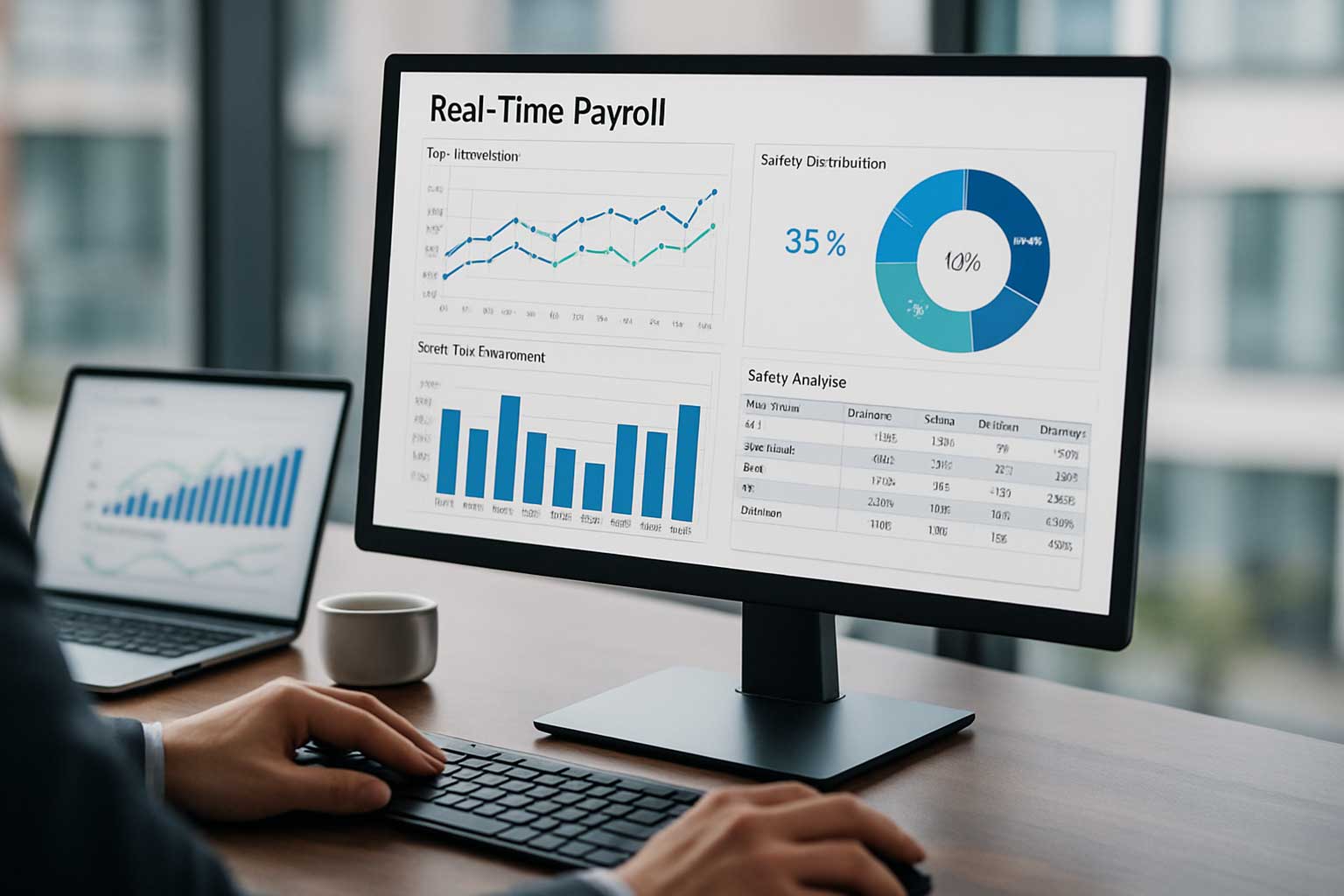
Payroll dashboards display data visually through:
- Real-time charts
- Automated KPIs
- Overtime meters
- Department cost breakdowns
- Predictive analytics models
Leaders are able to access complicated data on payroll visually.
7. Choosing the Best Payroll Analytics Tools (2025–2026)
Look for payroll systems that offer:
- Real-time payroll analytics
- API integrations
- Automated tax updates
- BI dashboards
- HRIS syncing
- Multi-state compliance
- Predictive modeling
Solutions such as PayProNext provide companies with a contemporary overview of payroll information and ease in compliance and reporting.
Conclusion: Payroll Analytics Turns Data Into Strategy
Real-time payroll analytics has changed payroll from an administrative task to a business intelligence platform that assists businesses in knowing their employees, managing labor expenses, predicting financial requirements, and being in compliance with much more precision. Using the insights provided by the payroll as opposed to manual calculations and reported data allows businesses to make decisions faster, staffing becomes more efficient, hiring strategies become more effective, issues are identified early on before they become expensive, and performance across all departments is better. By 2025 and, hopefully, later, those companies that adopt real-time payroll analytics will not operate more efficiently; they will use payroll as a potent data engine to drive growth, financial health, and long-term competitiveness.