
Year-End Payroll & Tax Checklist for U.S. Small Businesses in 2025: Wrap Up the Year & Start Strong
Date Released
13 November, 2025
At the end of the year, U.S. small businesses have a crucial task: to properly and timely close payroll and tax operations. The two months of December and January are the months with the highest compliance burden, and a mistake made now will result in IRS fines, late W-2 submissions, errors in records, and frustrated employees.
This payroll checklist is a 2025 payroll end-of-year guide that will give you step-by-step instructions on how to finalize your payroll by December and be ready to start 2026, whether you are manually preparing payrolls, using payroll software, or using an accountant to prepare payrolls.
1. Verify Employee Information Before December 31
Begin payroll year-end and ensure that all data on employees and contractors is correct. This eliminates errors in filing, disapproved forms, and reissues that are expensive.
Verify the following:
- Full legal Name (Same as that mentioned in your Social Security Records)
- Social Security numbers
- Home addresses
- Allowance and Filing status (W-4 Form)
- Direct deposit information
- Employment status (active or terminated)
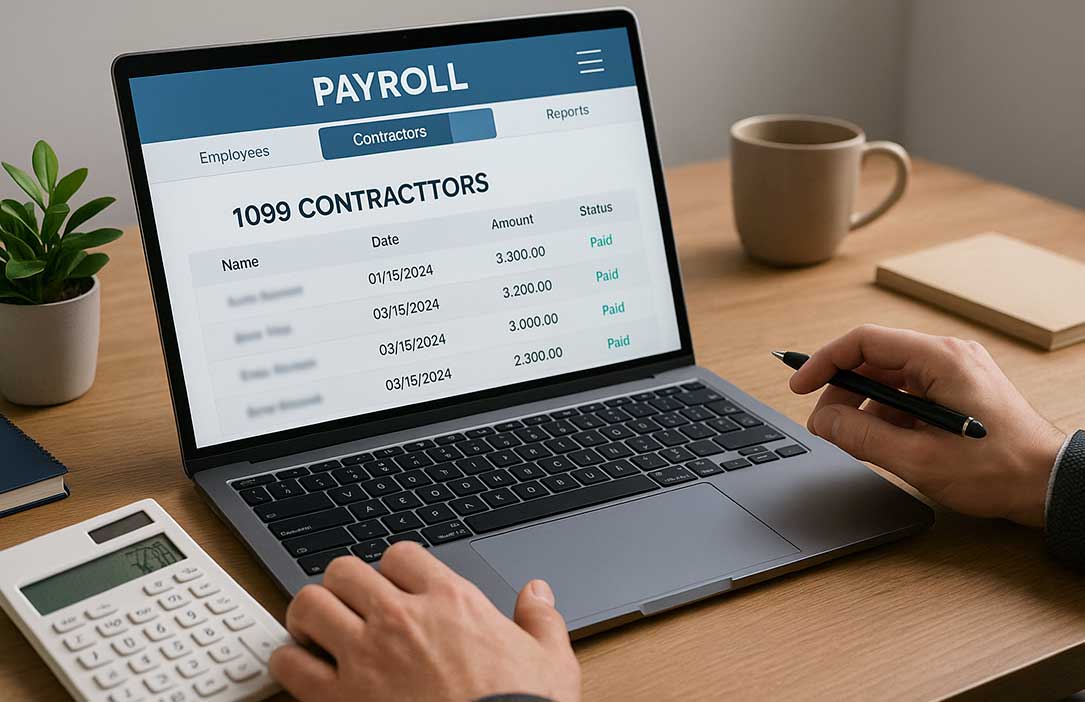
- Contractor details for 1099-NEC
This will automatically remove most of the W-2 and 1099 filing work that was delayed in January.
2. Audit Employee Wages, Hours & Tax Withholdings
To verify the year-end compliance of the payroll of small businesses, reconcile:
- Gross earnings
- Overtime calculations
- PTO payouts and sick leave
- Bonuses and commissions
- Benefit deductions
- Overall employer contributions (retirement, health, dental)
- Federal and state income tax withholding
- FICA (Social Security and Medicare)
To avoid any differences between the payroll and IRS returns, it's important to have this wage reconciliation.
3. Review Taxable Fringe Benefits
The IRS expects certain fringe benefits to be included in an employee's taxable wages. Prior to finalization of payroll, ensure that you have provided:
- Company vehicle usage
- Group-term life insurance over $50,000
- Education assistance
- Relocation reimbursement
- Gift cards or holiday bonuses
- Wellness stipends
- Employee meals
This should be included in the final paycheck of the employee at the end of the year to cover end-of-year payroll reporting.
4. Process Final Payroll for 2025 Before December 31
The final payroll of the year must contain:
- Final wages
- PTO payouts (if applicable)
- Bonuses
- Commissions
- Reimbursements
- Adjustments for taxable benefits
Tip
Conduct your last payroll 3-5 days before it is due to prevent the delay caused by bank holidays and the backlog of end-of-year processing.
5. Reconcile All Payroll Tax Payments
Before closing out 2025, reconcile:
- Federal income tax withheld
- Social Security tax
- Medicare tax
- FUTA contributions
- SUTA contributions
- State/local payroll taxes
Compare the amounts paid with what your payroll system reports. Discrepancy identification today helps to avoid IRS notices in the future.
This happens to be among the most crucial steps in a December and January payroll compliance checklist.
6. Prepare W-2s and 1099 Forms Early
Deadlines for U.S. businesses:
- January 31, 2026 — Send W-2s to employees
- January 31, 2026 — Send 1099-NEC to contractors
- January 31, 2026 — File W-2s and 1099-NEC with the IRS and SSA
Make sure to prepare these forms in the first week of January, so as to avoid rush mistakes.
In case you hired some contractors using such a platform as Fiverr or Upwork, make sure whether you or the platform has to file the 1099-NEC.
7. Review Employer-Sponsored Retirement Plans
For 2025 year-end payroll and tax accuracy, check:
- 401(k) elective deferrals
- Employer match calculations
- SIMPLE IRA contributions
- SEP IRA contributions
- Vesting schedules
- Catch-up contributions (for employees 50+)
One of the leading causes of end-of-payroll corrections and audit investigations by the IRS is errors in reporting retirement contributions.
8. Update Payroll Tax Rates for 2026
New payroll rules are introduced every January. Small businesses need to plan on:
- New federal brackets of payroll taxes.
- Changes in the Social Security wage base.
- New state income tax rates
- Minimum wage increases (many states update Jan 1)
- New FSA and HSA contribution limits
- New mileage reimbursement rate
- State unemployment rate changes
Early planning of payroll tax rate changes for small businesses will help them have a hassle-free January.
9. Clean & Organize Payroll Records
Proper year-end payroll cleanup protects your business from compliance issues.
Confirm that your payroll records include:
- Timesheets and hour logs
- Employee pay summaries
- Tax deposit confirmations
- Payroll reportsNew hire documents
- Termination records
- Benefits enrollment forms
- Garnishment orders
Maintain the payroll record for at least 4 years as recommended by the IRS.
10. Run Year-End Reports
Run and save the following reports:
- Annual payroll summary
- Gross-to-net report
- Tax liability report
- Department labor cost report
- Worker classification report
- PTO balance report
- Benefits deduction summary
These are required during the taxation filing period, auditing, or in case you change the payroll systems.
11. Set Up Payroll for the Beginning of 2026
Once you close 2025, prepare for the new year:
- Reset PTO balances
- Add new tax tables
- Update employee wage rates
- Establish new deductions of benefits.
- Re-classify employees where necessary.
- Re-establish state unemployment accounts.
- Update holiday schedules
- Ready new employees and temporary employees.
This ranks among the most critical initial payroll (2026) setups.
12. Automate Year-End Tasks With Payroll Software
If your payroll becomes overwhelming at the end of the year, we have the best solution for you, a payroll software that can grow with your business and handle everything easily, i.e., PayProNext (A smart payroll system quickly becoming the #1 choice for businesses).
Benefits of small business payroll software for year-end:
- Automatic tax updates
- Built-in W-2/1099 generation
- Deadline remindersError checking
- Automated tax deposits
- Easy record storage
- Direct integration with accounting tools
It is also among the most suitable end-of-year payroll and tax best practices that startups and small businesses can use to save some time and evade compliance errors.
Final Thoughts
It's not a must to have payroll nightmares at the end of every year.
This checklist can help you make your year-end easy and assist you in verification of employee details, reconciling taxes, and you can prepare for forms early and update your system for 2026.
A payroll close with a lot of strength now results in a more powerful financial start in January.