


Why Poor Payroll Processes Lead to Higher Employee Turnover
Date Released
12 June, 2026
Every paycheck is a promise. When that promise is broken, whether through a delayed payment, a miscalculated deduction, or an unexplained discrepancy, employees notice. And over time, they leave. Poor payroll processes are one of the most underestimated drivers of employee turnover in American businesses today, yet too many employers treat payroll as a back-office afterthought rather than the employee experience touchpoint it truly is.
Payroll Is More Than Just Payments
Most business owners think of payroll as a simple transaction: calculate hours, apply the rate, cut the check. But for employees, payroll is something far more significant. It is the most tangible, recurring demonstration of whether their employer respects them, values their time, and runs a trustworthy organization.
Payroll accuracy directly affects financial stability. When employees can reliably count on being paid the right amount on the right date, they can meet their mortgage, cover childcare, and plan their household finances. That reliability builds psychological safety. When it fails, the damage is immediate and personal.
In fact, payroll is often the very first touchpoint a new hire has with the company's operational culture. A botched first paycheck sends a message no onboarding presentation can undo.
How Poor Payroll Processes Affect Employees
Late Payments Create Financial Stress
A paycheck that arrives two days late may seem like a minor inconvenience from a management perspective. For the employee waiting to pay rent, it can mean overdraft fees, missed bills, and a cascade of financial anxiety. According to a survey by the American Payroll Association, nearly 72% of American workers live paycheck to paycheck. For these employees, payroll delays are not inconveniences; they are financial emergencies.
Payroll Errors Reduce Trust
Employees who discover errors in their pay, whether underpayment, incorrect tax withholding, or missing overtime, do not simply report the mistake and move on. They question whether the error was accidental or intentional. They wonder if they were underpaid in previous periods. Trust, once lost, is nearly impossible to rebuild through payroll alone.
Lack of Transparency Causes Frustration
When employees cannot access a clear, itemized pay stub or when deductions appear without explanation, frustration mounts. Workers want to understand how their gross pay becomes their net pay. Opaque payroll processes breed suspicion, particularly around tax withholdings and benefit deductions.
Inconsistent Payments Hurt Morale
Receiving different net pay amounts from one period to the next without a clear reason sends employees into confusion. Even when the inconsistency is legitimate (such as a bonus or a corrected error), poor communication around payroll changes fuels resentment and disengagement.
| Real-Life Example A regional retail chain in Texas ran manual payroll across 5 locations. During a busy holiday season, a data entry error caused 23 employees to receive 40% less than their expected pay. It took two weeks to resolve. By month's end, 7 of those 23 employees had resigned, citing the incident as the final straw in a pattern of operational chaos they no longer trusted. |
The Direct Link Between Payroll Issues and Employee Turnover
The connection between payroll problems and employee resignations is not speculative; it is documented and measurable. Employees who experience repeated payroll issues go through a predictable progression:
- They lose confidence in the company's competence and leadership
- Dissatisfaction grows, especially when issues go unresolved quickly
- Engagement drops as employees begin mentally disengaging from their role
- They begin exploring other job opportunities
- A single additional incident or a better offer triggers resignation
The business angle is equally compelling. The Society for Human Resource Management (SHRM) estimates that replacing an employee can cost anywhere from 50% to 200% of their annual salary. For a $50,000-per-year employee, that is a $25,000 to $100,000 expense per departure. Multiply that across multiple payroll-driven exits, and the cost becomes existential for small and mid-sized businesses.
Common Payroll Problems That Drive Employees Away
Understanding the specific failure points in your payroll process is the first step toward fixing them. The most damaging payroll problems include:
- Incorrect salary or hourly rate payments due to outdated employee records
- Delayed payroll processing from manual workflows or system failures
- Tax deduction errors that leave employees with unexpected balances at tax time
- Overtime miscalculations that violate FLSA requirements and underpay workers
- Benefits mismanagement, incorrect health insurance premiums, 401(k) contribution errors, or missed FSA deductions
Each of these issues represents not only a direct harm to the employee but also a potential legal liability for the employer. Federal and state agencies, including the Department of Labor and the IRS, take wage and hour violations seriously, with penalties that can far exceed the cost of the original error.
The Hidden Costs of Payroll Inefficiency
Business owners often see payroll errors as isolated incidents with a simple fix: issue a correction and apologize. But the true cost of payroll inefficiency is far broader and deeper. Consider the following cost categories:
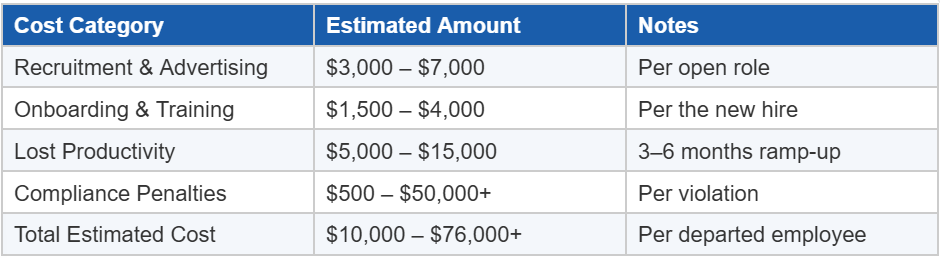
These figures make one thing unmistakably clear: investing in an accurate, efficient payroll system is not an expense; it is a retention strategy that pays for itself many times over.
How to Identify Payroll Process Issues in Your Business
Payroll problems do not always announce themselves loudly. Many businesses operate with chronic inefficiencies that quietly drain morale and inflate turnover without ever triggering an obvious alarm. Here is how to identify whether your payroll process has systemic problems:
- Employees frequently bring payroll discrepancies to HR or management's attention
- Payroll corrections are required on a regular basis after processing
- Payroll runs are often completed close to or after the deadline
- Your team lacks clear reporting visibility into labor costs, overtime, or deductions
- Employees express confusion about their pay stubs or deduction breakdowns
- You are manually reconciling data across multiple spreadsheets or disconnected tools
If two or more of these signs are familiar, your payroll process is likely contributing to employee dissatisfaction even if no one has said so directly.
Best Practices to Improve Payroll Processes
Improving payroll is not just about buying new software. It requires a disciplined operational approach built around accuracy, timeliness, and communication. The following best practices represent the gold standard for U.S. employers:
- Standardize payroll workflows with clearly documented procedures for every step, from time collection to final disbursement
- Maintain accurate, up-to-date employee records, including tax elections, benefit enrollments, and pay rate changes
- Conduct regular payroll audits at a minimum of quarterly to catch discrepancies before they compound
- Communicate proactively with employees about any changes to their pay, deductions, or tax withholdings
- Build a compliance tracking system that keeps your business aligned with federal and state payroll laws, including FLSA, state minimum wage changes, and tax deadlines
These practices can be implemented manually, but they scale best and fail least when supported by a purpose-built payroll management platform.
How Payroll Automation Reduces Employee Turnover
Payroll automation is not a luxury for large enterprises. It is a competitive necessity for any business that wants to retain good employees and stay compliant. Automated payroll systems deliver measurable advantages across every dimension of the payroll experience:
- Accuracy: Automated calculations eliminate the human error that causes underpayments, overpayments, and tax filing mistakes
- Timeliness: Scheduled, automated processing ensures employees are paid on time, every time, without manual follow-through
- Error reduction: System-driven validation catches inconsistencies like hours that exceed a standard workweek without an overtime flag before they become mistakes
- Employee experience: Self-service portals allow employees to view pay stubs, update direct deposit information, and access tax documents without waiting for HR
| How PayProNext Helps PayProNext is a U.S.-focused payroll management and compliance platform built for small and mid-sized businesses that want the power of enterprise payroll without the complexity. With PayProNext, your team gets paid accurately and on time, your compliance risks are managed automatically, and your HR team spends less time fixing errors and more time investing in your people. Visit PayProNext.com to see how the platform can transform your payroll operations. |
Payroll Process Improvement Checklist
Use this checklist to audit your current payroll process and identify gaps:
- Verify all employee payroll data is accurate and current before each run
- Confirm payroll processing is scheduled and completed by the required deadline
- Double-check all wage calculations, including overtime, bonuses, and commissions
- Maintain ongoing compliance with federal, state, and local payroll tax laws
- Monitor employee feedback channels for payroll-related complaints or confusion
- Review payroll reports each period for anomalies or unexpected variances
- Ensure all employees have access to detailed, itemized pay stubs
Real Business Scenarios
Scenario 1: Manual Payroll and Rising Turnover
A 45-person manufacturing company in Ohio processed payroll manually using spreadsheets. Each pay period, the HR administrator spent nearly two full days collecting timesheets, entering data, and double-checking calculations. Despite the effort, errors occurred in roughly one out of every five pay runs. Over 18 months, the company experienced a 34% turnover rate, significantly above the industry average. Exit interviews revealed that payroll frustration was a contributing factor in over half of voluntary resignations. The company estimated that turnover had cost them approximately $380,000 in that period.
Scenario 2: Automated Payroll and Improved Retention
A comparable company in the same region, a 52-person logistics firm, implemented an automated payroll platform. Within the first quarter, payroll errors dropped to near zero. Employees received pay stubs via a self-service portal and no longer needed to contact HR to verify deductions. Over the following 12 months, voluntary turnover dropped from 28% to 11%. The HR director attributed the improvement partly to improved operational confidence among staff, citing payroll reliability as a meaningful signal that the company was well-managed and invested in its workforce.
Frequently Asked Questions
How do payroll errors affect employee turnover?
Payroll errors directly erode employee trust and satisfaction. When workers repeatedly receive incorrect or late payments, they lose confidence in their employer, disengage from their work, and begin seeking employment elsewhere. Even a single significant payroll error can trigger a resignation if the employee was already dissatisfied.
Can payroll delays cause employees to quit?
Yes. For employees who live paycheck to paycheck, which describes the majority of American workers, even a brief payment delay can create serious financial hardship. Repeated delays signal organizational dysfunction and give employees a compelling reason to find a more reliable employer.
What are the most common payroll problems?
The most common payroll issues include incorrect wage calculations, missed or late payments, tax withholding errors, overtime miscalculations, benefits deduction mistakes, and failure to comply with state or federal payroll regulations.
How can businesses improve their payroll processes?
Businesses can improve payroll by standardizing workflows, maintaining accurate employee records, conducting regular audits, communicating proactively with employees, and implementing a modern payroll management system that automates routine tasks and flags potential errors before processing.
What tools help reduce payroll errors?
Payroll management platforms like PayProNext automate the most error-prone aspects of payroll wage calculations, tax filings, and compliance tracking while providing employees with self-service access to their pay information. These tools dramatically reduce both the frequency and the impact of payroll mistakes.
Final Thoughts
Payroll is not just a financial function. It is a trust system. Every pay period is an opportunity to reinforce to your employees that they made the right choice when they joined your organization or to remind them why they should start looking elsewhere.
Poor payroll processes are a hidden, high-cost driver of employee turnover that too many businesses overlook until the damage is already done. The employees who leave because of payroll failures rarely announce that as their reason. They cite career growth, culture, or opportunity, but underneath those polished exit interview answers is often a simpler truth: they stopped trusting the company to take care of them.
Smart payroll management is a retention strategy. When your employees are paid correctly, on time, and with full transparency, they feel valued. That feeling translates directly into engagement, loyalty, and reduced turnover, all of which protect your bottom line.
PayProNext was built to make that outcome the default for every American business, no matter the size. Accurate payroll. On-time payments. Full compliance. Because your employees deserve nothing less.
| Stop Losing Employees Over Payroll Problems PayProNext delivers accurate, on-time payroll so your team stays engaged, and your business stays compliant. Get Started Today at PayProNext.com |