

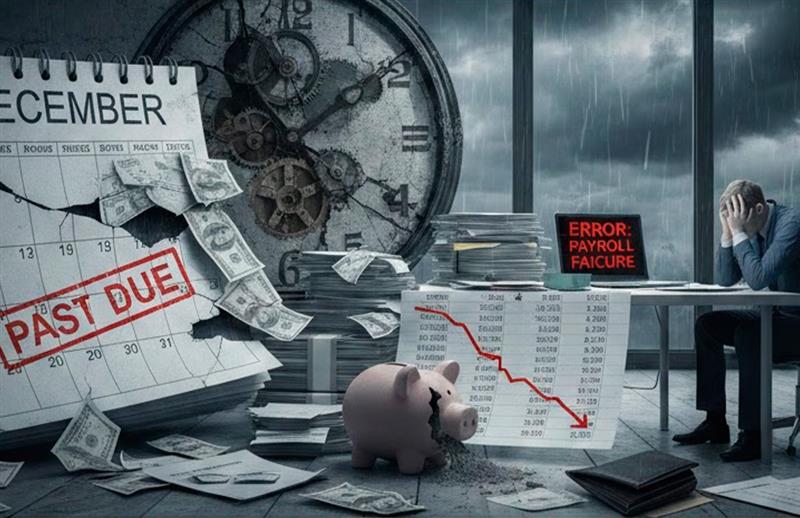
Impact of Missing Payroll in 2026: Costs, Consequences & How to Avoid It
Date Released
19 January, 2026
The impact of missing payroll has become significantly more severe in 2026. What might have been regarded as a temporary administrative problem is an operational and legal threat. The timing of payroll is more important than ever because wage and hour laws have become more enforced, wage theft issues have become more scrutinized, and payroll taxes are stricter than ever in compliance.
Having one missed payroll may have a ripple effect of consequences, among them being fines imposed by the regulators, grievances raised by employees, loss of reputation, and even long-term trust problems. In the case of small companies and teams that are developing, payroll risks for businesses no longer exist due to accounting mistakes. They now influence employee retention, compliance status, and stability.
This guide explains what happens if payroll is missed, the real costs and consequences businesses face, and how payroll mistakes in 2026 can be avoided through better systems and planning.
What Happens If Payroll Is Missed?
Immediate Business Impact
The impact of a missed payroll is experienced instantly. Direct deposit delays and failures of paychecks make employees uncertain about when they will receive their pay. Such misunderstanding usually results in a rising number of internal queries, complaints, and emergency requests for clarification.
There can be a need to make manual payments or re-run the payroll at short notice. Such emergency fixes add administrative burdens and cause new payroll processing errors, particularly when processed not as part of normal review workflows. The typical short-term effects are:
- Delayed or failed direct deposits.
- Manual paycheck processing under pressure.
- Employee frustration and loss of confidence.
Short-Term Consequences
The effects of missed payroll keep growing beyond the initial payroll cycle. Late payment and payroll schedule mistakes may cause repetitive delays unless the cause is addressed. Short-term consequences often include:
- More payroll processing errors.
- Payroll compliance consequences in several states.
- Heightened risk of formal complaints or audits.
It is also important to know what would occur in case payroll is missed, since a single delay would place businesses in additional compliance and legal exposure.
Legal and Compliance Consequences of Missing Payroll
Wage and Hour Law Violations
The timing of the payroll is not at all optional. Employee pay date laws require workers to receive payment at designated schedules. Absence of payroll may also be a breach of wage and hour compliance regulations and, in certain jurisdictions, trigger wage theft regulations.
State and federal laws on payroll are different, although most of them have strict provisions regarding: Pay frequency, Final pay timing, Overtime and minimum wage payments. The inability to comply with these conditions poses an instant legal threat to payroll.
Payroll Tax and IRS Risks
Late or wrong payroll deposits are usually caused by missing payroll. In case deposits, withholding tax, and reporting are not done properly, businesses face IRS payroll compliance penalties.
For small businesses, payroll tax penalties can quickly exceed the original payroll amount, turning a single missed payroll into a costly legal and financial issue. This makes the legal impact of missing payroll particularly severe and reinforces why payroll compliance errors and delayed tax payments must be addressed proactively.
Financial Costs of Missed Payroll in 2026
Direct Financial Penalties
Finished in 2026, the amount of missed payroll fines and penalties has increased and applied more actively. State and federal penalties are often quite common in payroll, where owners of small businesses end up paying payroll penalties. Direct costs may include: Penalties for missed payroll payments in 2026, Late filing and deposit fines, Legal fees related to compliance disputes.
Indirect Business Costs
Indirect expenses can be even worse than direct fines. Resources are wasted in rework, administration, and payroll corrections, which would otherwise be used to enhance growth. Late payroll also exposes the company to worker turnover and dissatisfaction with clients. Indirect consequences include:
- Lost productivity due to payroll corrections.
- Employee and client retention risk.
- Damage to the employer brand and credibility.
These payroll mistakes and legal consequences create long-term payroll problems small business owners face when systems are not corrected early.
How Missing Payroll Affects Employees
Employee Morale and Trust
Workers depend on a stable income in the form of monthly payments to address individual financial needs. Late paychecks cause a short-term financial strain and a lack of confidence in the employer. Employee morale and the reliability of the payroll are two variables that are closely interconnected over time.
The effects are lower employee engagement and productivity, and high turnover due to low confidence by the workers in the reliability of the payroll.
Compliance and Employee Rights
Employees are protected by wage and hour compliance rules. When payroll is missed, workers may file complaints with labor departments or pursue legal action. Labor law violations related to payroll timing can escalate quickly, especially in multi-state environments.
Understanding how missing payroll affects employees is essential to preventing compliance disputes and reputational damage.
Common Reasons Businesses Miss Payroll
Operational Failures
The weaknesses in day-to-day processes are usually the root causes of common operational failures, causing missed payroll. Errors in data entry by hand make the chances of making an error in calculation more likely, understanding of the pay schedules may trigger errors in payroll timing, and there are no formal payroll review systems that can signify a problem before the payments are already overdue.
These payroll processing errors, when combined, pose a continuous payroll compliance threat to small businesses.
System and Process Gaps
More significant are system limitations. Payroll processing errors occur when there is no redundancy, no approval workflow, or no automated compliance updates. Payroll compliance errors often arise from:
- Outdated payroll systems.
- Missing regulatory updates.
- Single-person dependency.
The resulting gaps cause recurring payroll problems in small businesses that increase with the growth of the businesses.
Payroll Compliance Risks for Small Businesses
Why Small Businesses Are Most Exposed
A small business is associated with a small payroll and fewer internal controls. There is an additional complexity in multi-state operations as well as with contractor relationships. Key risk factors include: Limited payroll expertise, Contractor and employee classification issues, and Reliance on outdated tools.
Payroll Audit and Enforcement Risk
Late payroll increases audit risk. Repeat payroll problems are often followed by an IRS payroll compliance audit and a state labor department investigation. The consequences increase with the frequency of the violation, and therefore, early prevention is essential.
Payroll Best Practices to Prevent Missed Payroll
Payroll Scheduling Best Practices for 2026
Clear payroll calendars and buffer periods are essential. Businesses should establish internal deadlines that allow time for review and correction before payroll runs. Best practices include:
- Defined payroll schedules.
- Buffer periods for approvals.
- Clear ownership of payroll tasks.
Process and System Controls
Strong controls reduce risk and improve reliability. Back-up procedures, payroll checklists, and regular compliance reviews will ensure that an error will be minimized before they can affect employees. These are small business payroll compliance tips, which form the basis of payroll stability.
How Payroll Automation Prevents Missed Payroll
Role of Automation in Payroll Accuracy
Payroll automation helps to eliminate manual practices. Payroll services are automated, and they are used to calculate, file, and do compliance checks. Key benefits include:
- Automated payroll tax filings.
- Built-in compliance logic.
- Error detection before payroll runs.
When Automation Becomes Necessary
As headcount grows, multi-state payroll becomes common, and compliance exposure increases, automation shifts from optional to essential. Understanding how payroll automation prevents missed payroll helps businesses scale with lower risk.
In-House vs Outsourced Payroll: Risk Comparison
In-House Payroll Risks
In-house payroll usually relies on one person. The rate of compliance update and increased error rate is a common occurrence when systems are highly dependent on manual checks.
Outsourced Payroll Services for Risk Reduction
Payroll compliance solutions with professional management are offered as outsourced payroll services. This solution helps in preventing payroll penalties and minimizes the operational stress, particularly in expanding companies.
How PayProNext Helps Businesses Avoid Missed Payroll
PayProNext supports businesses with automated payroll and compliance workflows designed for small businesses. The platform provides payroll tax filing and monitoring, payroll automation built for accuracy, and scalable support across multiple states, helping businesses reduce missed payroll risk without increasing administrative burden.
Conclusion:
The risk of missing payroll is avoidable. Early warning signs such as recurring corrections, delayed payroll runs, and compliance concerns should be addressed immediately. The cost of waiting is far greater than the cost of improving payroll systems now.
Improving payroll processes, adopting automation, and prioritizing compliance help businesses protect employees, prevent fines, and create a stable payroll base in 2026 and further.