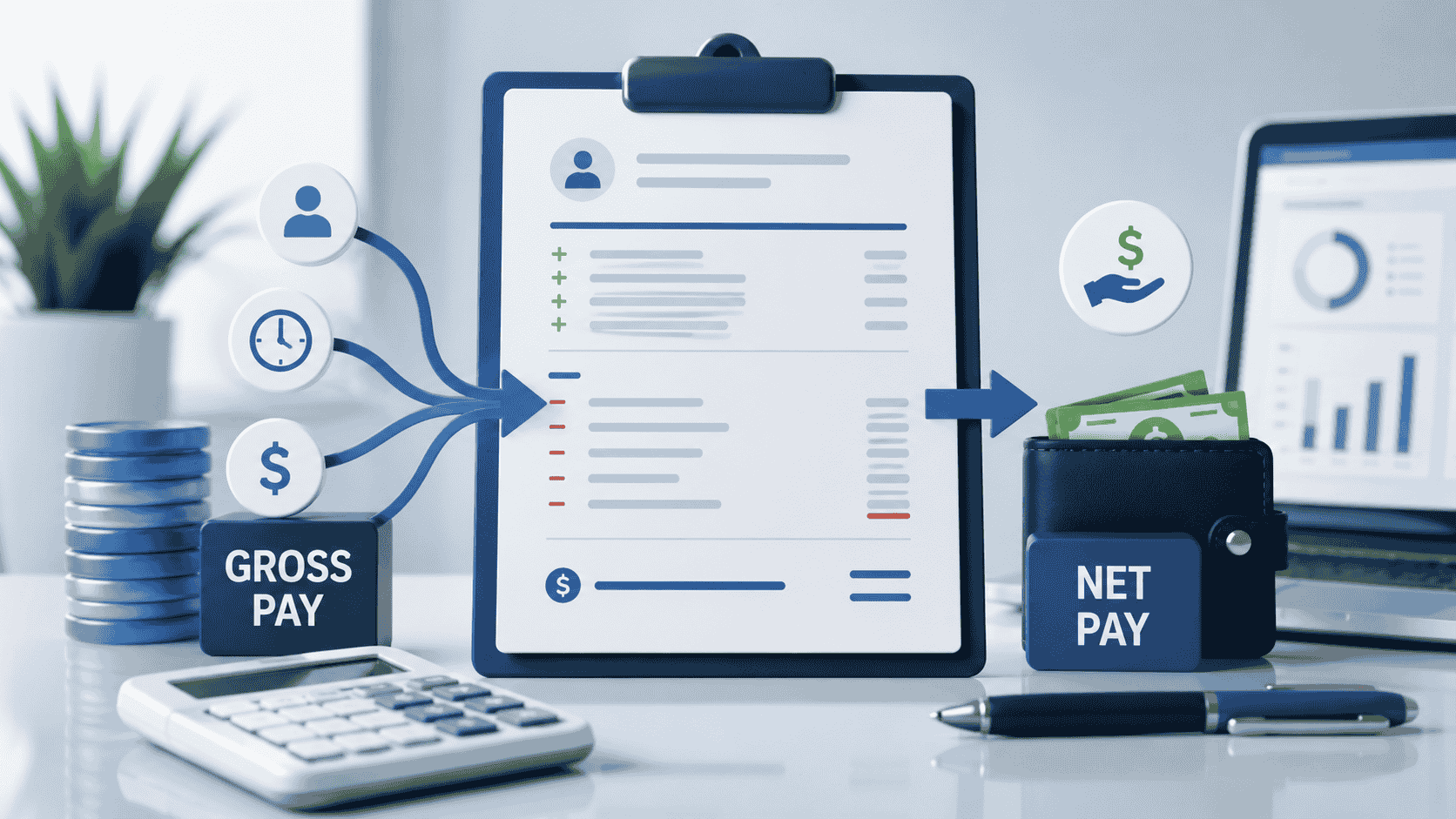


How Smart Payroll Analytics Helps Businesses Make Better Financial Decisions
Date Released
17 March, 2026
Payroll has evolved far beyond processing salaries and ensuring compliance. Today, it’s one of the most powerful sources of financial insight within a business.
With smart payroll analytics, companies can transform everyday payroll data into strategic insights that drive better budgeting, forecasting, and long-term decision-making.
Instead of treating payroll as a support function, businesses are now using payroll data to uncover cost patterns, improve workforce efficiency, and make faster, more confident financial decisions.
Understanding Payroll Analytics in a Modern Business Context
Payroll analytics is essentially the process of interpreting payroll-related data in order to create actionable information. This covers all the aspects, such as wages of employees and overtime, tax payments, and benefits. But the true worth is to relate this information to higher business objectives.
Businesses using payroll analytics software can have access to the visibility of the workforce costs at work in terms of profitability. As an illustration, when the expenses of overtime increase without a notification, it is possible to assume that the company is understaffed, whereas when the expenses in terms of benefits are increased, it is possible to assume that the company is reorganizing its compensation strategies.
This depth of understanding makes payroll an important part of financial information analysis, allowing businesses to make decisions on the workforce according to the revenue objectives.
Why Smart Payroll Analytics Is a Game-Changer
Conventional payroll systems are concerned with accuracy, whereas smart payroll analytics is concerned with intelligence. It helps organizations to shift their problem-solving into anticipatory planning.
The availability of real-time payroll insights on the businesses allows the decision-makers to determine the areas of inefficiency before they become expensive problems. This not only enhances the efficiency of operations but also enhances long-term financial planning.
Companies that implement business attributes such as payroll reporting and payroll analytics achieve the benefit of making decisions based on data and not on the back of a truck.
How Payroll Analytics Improves Financial Decision Making
This is one of the greatest benefits of data-driven payroll decisions, as it enables one to know exactly where money is flowing and why.
As an example, payroll analysis over time assists the business in establishing trends, like seasonal peaks in hiring, excessive turnover, or overtime. Such insights enable businesses to modify recruitment practices, integrate optimal human resources management, and minimize wastage costs.
Moreover, payroll financial insights are important in budgeting. Businesses can use past and predictive data to make sound financial plans instead of making estimates on their labor plans. This is particularly helpful in cases where payroll forecasting tools are applied, and organizations can predict their future expenditures and plan them in advance.
Key Payroll Metrics That Influence Financial Strategy
To make good decisions about payroll data, it is important to understand the appropriate metrics. The following table will show the most significant payroll KPIs and their effects on financial decisions:
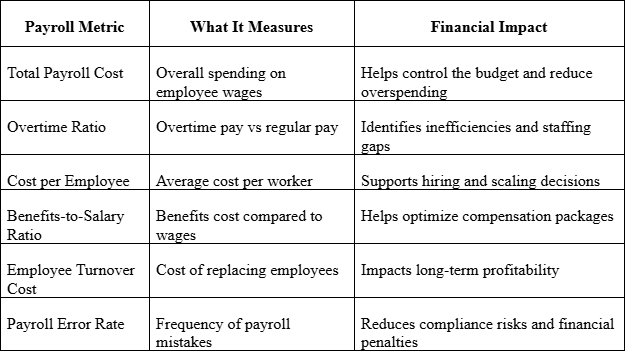
Monitoring these payroll performance indicators can allow businesses to stay financially healthy and minimize workforce expenses.
Benefits of Payroll Analytics for Businesses
Although the effect of payroll analytics is wide-ranging, the following benefits are evident:
- Better visibility into payroll expenses and trends
- Improved accuracy in financial forecasting
- Enhanced workforce planning and cost control
- Reduced compliance risks and payroll errors
- Stronger alignment between HR and financial goals
These strengths show the usefulness of payroll analytics in catalyzing operational efficiency and financial growth.
Payroll Cost Optimization Through Data Insights
Cost optimization is one of the most feasible applications of payroll information. Many businesses lose money through unnoticed inefficiencies like excessive overtime, overstaffing, or poorly structured compensation plans.
In the optimization of the payroll cost, the companies are able to analyze the patterns of spending and determine where changes can be incorporated. As an illustration, when statistics indicate that there is always a high occurrence of overtime in one of the departments, then it might be cheaper to hire new personnel rather than pay extra hours.
The strategy will make sure that all the dollar spent on payroll is used to achieve productivity and growth.
The Role of Payroll Analytics in Forecasting and Budgeting
Accurate forecasting is essential for financial stability, and payroll analytics plays a key role in making it possible.
Through the historical payroll information, the companies are able to forecast the future labour costs more precisely. This will enable them to have a better budget, smarter hiring decisions, and better handling of cash flow.
With payroll dashboard analytics, leaders will be able to visualize trends and make real-time adjustments. This makes sure that financial plans are flexible and transformable to changing business requirements.
Integrating Payroll Analytics with HR and Business Intelligence
The integration of payroll information with HR systems is becoming an increasing trend in modern organizations to enable a single vision of workforce performance. Such a combination of HR analytics tools with payroll systems offers more information on employee productivity and engagement, as well as cost-effectiveness.
Once payroll information is synchronized with business intelligence payroll systems, organizations can make better strategic choices on promotions, payments, and the growth of the workforce. The integration is a holistic approach that will allow the financial decisions to be supported with both operational and human resource information.
Best Practices for Payroll Reporting and Analytics
To fully leverage payroll reporting tools, businesses should follow a structured approach:
- Centralize payroll and HR data for better visibility
- Automate reporting to reduce manual errors
- Focus on actionable insights rather than raw data
- Regularly review payroll KPIs and trends
- Use predictive analytics for future planning
Such practices make the analysis of payroll data of a business to provide consistent and meaningful results.
Payroll Analytics for Small and Growing Businesses
Small businesses usually think that advanced analytics can only be used in large businesses, but that is no longer true. Even with smaller organizations, data-driven insights can be obtained with the help of easily available payroll analytics tools.
The cost control, better hiring approaches, and smarter financial choices can be achieved by the companies, without having to mobilize huge budgets and sophisticated systems, by using payroll analytics to make small business decisions.
Final Thoughts
Payroll is no longer a routine, but it is becoming one of the most valuable sources of financial insight to a business. What was previously restricted to the processing of salaries and compliance is assisting organizations in developing smarter financial strategies.
With the help of smart payroll analytics, companies will be able to convert their daily payroll data into insights that will impact their budget, predictions, and long-term planning. Companies are not considering payroll as a back-office activity, but instead leveraging payroll data analytics to find trends, control costs, and workforce efficiency, making more informed decisions more quickly and confidently based on data, instead of guesses.
Make more intelligent decisions with smarter insights so you can reduce costs and maximize profits using PayProNext today, because your payroll was once a strategic asset.