
How Payroll Software Protects You From IRS Audits (2026 Guide)
Date Released
22 January, 2026
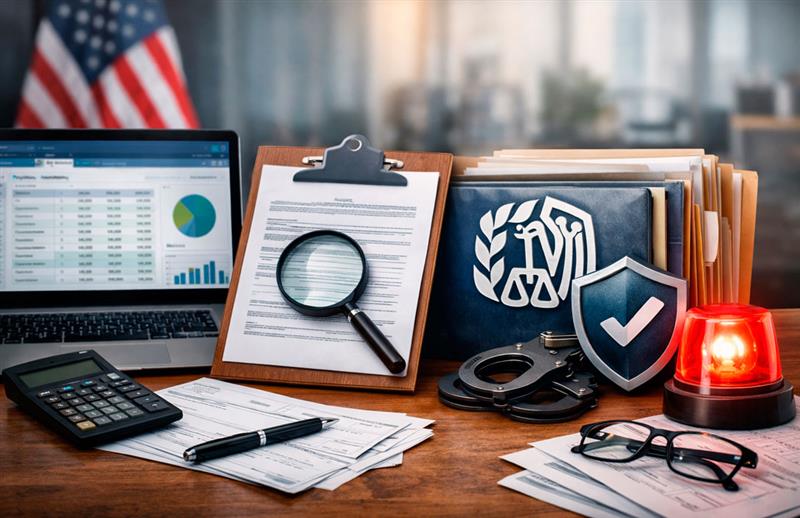
In 2026, IRS payroll audit is increasingly becoming usual, particularly on small and mid-sized businesses. It is now able to identify inconsistencies more quickly than ever before with improved data-matching systems, more stringent enforcement, and more emphasis on payroll tax compliance. Even simple mistakes in payroll might provoke expensive audits, punishment, and back taxes.
Small businesses' payroll audits are on the increase due to the fact that most of the companies still use manual methods, spreadsheets, or outdated systems that heighten the risk. Misclassification of employees, late filing, and misclassification of tax returns are some of the common IRS payroll audit risks.
It is here that the modern payroll software plays a critical role. Payroll software prevents audit by the IRS, which is important in payroll audit prevention by automating calculations, filing, and compliance checks.
What Triggers an IRS Payroll Audit?
Knowing the causes that lead to an audit is the beginning of prevention. The majority of audits of payroll are based on preventable errors, rather than intentional noncompliance.
Common Payroll Audit Mistakes
Incorrect reporting of Form 941 is one of the largest payroll audit errors. The mismatch of the wages and withholdings or the payroll taxes with the records maintained by the IRS is a red flag.
Another significant trigger is late or wrong payments of payroll taxes. Late payments or late delivery of goods are red flags that alert auditors to the issue of compliance, raising audit risk.
Any misclassification of workers as independent contractors other than W-2 employees is similarly under intense scrutiny. The most common examples of IRS investigations are wage, overtime, and hour compliance errors, such as wrong rules of overtime calculation.
The Role of Payroll Software in IRS Compliance
The payroll compliance software is developed with the sole aim of eliminating these risks through the alignment of all payroll processes with the regulations set by the IRS.
How Payroll Compliance Software Works
The automated calculations of modern payroll software are based on the existing IRS payroll compliance requirements. Tax rates at the federal, state, and local levels are automatically updated, and chances of human error are minimized.
Automated audits ensure compliance with wage pay limits, overtime, and deductions prior to payroll being sent out. These error checks greatly minimize audit exposure and assist in ensuring payroll software IRS compliance at all levels.
IRS compliance(payroll) automation eliminates guesses and ensures the business is in line with the evolving regulations.
Automated Payroll Tax Filing & Deposit Compliance
Including manual filing of payroll taxes is one of the leading reasons for IRS penalties. This risk is removed by automation.
Payroll Tax Filing Automation Explained
Filing of the payroll taxes is automated to make sure that the Forms 941, W-2, and 1099 are filed correctly and submitted on the due date. IRS reporting payroll software also automatically schedules and files payroll tax deposits.
Businesses no longer pay late fees, interest, and penalties as they ensure compliance with payroll tax deposits. Automated payroll to prevent IRS penalties is not an option anymore; it is a necessity in terms of audit protection.
Accurate Reporting That Keeps You Audit-Ready
Accurate payroll reporting is a key defense during an IRS audit.
Payroll Reporting Accuracy
Payroll software provides real-time reports on wages, taxes, deductions, and benefits. Such reports provide accuracy in the similarities between the payroll and IRS filings, which minimizes the gap that causes an audit.
Using payroll software to provide audit-ready reporting allows businesses to generate summaries, tax form and detailed breakdowns instantly in the case that the IRS would demand documentation.
Audit Trail Documentation & Record Retention
The IRS doesn’t just check numbers; it checks documentation.
Why Audit Trails Matter
Payroll software provides an auditing trail documentation that is secure and that demonstrates who made changes, when, and why. Such transparency is essential in an audit.
Payroll systems used by the majority of companies also observe the Timekeeping recommendations by the IRS regarding retention of the payroll records in safe places over a period of years. The access to historical data is easy and boosts the IRS audit protection of payroll activities, and gives small businesses a sense of security.
Compliance Alerts & Error Prevention
Proactive compliance is better than reactive damage control.
Staying Ahead of IRS Issues
Payroll compliance systems have deadlines, tax deposit alarms, and regulatory updates. Payroll errors are automatically detected to signal a problem before the violation occurs.
Constant updates make sure that it keeps up with the state and federal payroll regulations. Such a high degree of payroll error prevention reduces audit risk to a great extent.
Payroll Software for Small Business Audit Protection
Small businesses face a higher audit risk due to limited staff and manual systems.
Why Small Businesses Are Most at Risk
There are higher chances of errors when there are no payroll professionals. Penalties can easily be caused by manual calculations and failure to meet deadlines.
Small business payroll audit software minimizes the risk of human error by automating compliance functions and reducing the risk of human error. Payroll software is much cheaper than IRS fines, back taxes, and lawsuits when it comes to costs. This turns out to be payroll software that minimizes audit risk into a smart investment.
IRS Payroll Audit Checklist: Are You Compliant?
Use this IRS payroll audit checklist for businesses to assess your readiness:
- Form 941 filed accurately and on time
- Payroll tax deposits completed correctly
- Employee classification verified (W-2 vs 1099)
- Wage and hour compliance confirmed
- Payroll records are securely stored and accessible
These steps help avoid payroll compliance mistakes that trigger audits.
How to Choose the Best Payroll Software for IRS Compliance
Not every payroll system will provide an equal amount of protection. Find tax compliance payroll software with automatic filing capabilities, audit trails, real-time reporting, and compliance notification. Do not use systems with manual tax submission or non-compliant ones.
Request the payroll providers what support services they have regarding the IRS compliance, error correction, and payroll tax services before settling on the platform. The choice of the optimal payroll software to comply with the IRS may be the difference between audit compliance and fines.
Final Thoughts: Avoid IRS Audits With Smart Payroll Automation
IRS payroll audits are stressful, expensive, and disruptive, but they’re also preventable. By automating calculations, filings, reporting, and compliance monitoring, payroll software prevents IRS audits before they start.
The long-term benefits of automation include fewer penalties, improved accuracy, and peace of mind. If your goal is to avoid payroll tax audits with automation, now is the time to invest in an audit-ready payroll system that grows with your business.
Protect your business from IRS audits with PayProNext.
Book a free demo to see how PayProNext can streamline your payroll processes.