

How Does Payroll Work for Real Estate Businesses With Different Pay Structures?
Date Released
12 November, 2026
Real estate payroll rarely resembles payroll at an ordinary small business. In a single pay period, one brokerage might owe commissions to agents, a salary to an office manager, hourly wages to a receptionist, and a base-plus-commission check to a team lead. Each arrangement triggers different tax, reporting, and recordkeeping duties, and a wrong worker label can be costly.
This guide explains how real estate payroll works across common pay structures and how to keep it accurate. It is general information, not legal or tax advice.
Real Estate Payroll Starts With the Pay Structure
Brokerages typically combine a few models:
- Commission only: the agent earns a share of the commission on each closed transaction, as set by the agent agreement.
- Base salary plus commission: a fixed amount each pay period, plus commission or bonuses tied to closings.
- Salary: a fixed amount each pay period, common for managers and some licensed staff.
- Hourly: pay based on hours worked, common for administrative and support roles.
Commission income arrives when deals close and funds are disbursed, not on a fixed calendar. That is why many agents don’t receive a regular paycheck, while salaried and hourly staff usually do.
Employee vs. Independent Contractor: How Classification Shapes Payroll
Many agents work as independent contractors, but that is never automatic. For federal tax purposes, the IRS treats a licensed real estate agent as a statutory nonemployee, meaning self-employed, only if substantially all pay is directly related to sales or other output rather than hours worked, and the agent works under a written contract stating they won’t be treated as an employee for federal tax purposes.
Everyone else is judged on the actual working relationship. Under IRS common-law rules, a worker is generally an employee when the business has the right to control what is done and how. The IRS states plainly that it doesn’t matter what the relationship is called. State agencies and the Department of Labor (DOL) apply their own tests, and DOL guidance on contractor status under the Fair Labor Standards Act (FLSA) has been shifting, so a signed contract alone won’t settle the question. Requirements vary by state, so confirm classification with an employment attorney or tax professional.
The payroll consequences differ sharply:
- Employees: you withhold federal income tax based on Form W-4, withhold the employee share of Social Security (6.2% up to the 2026 wage base of $184,500) and Medicare (1.45%), pay the matching employer share, make tax deposits, and report wages on Form W-2.
- Independent contractors: you generally don’t withhold or pay employer payroll taxes. You collect a Form W-9 and report payments of $2,000 or more made in 2026 on Form 1099-NEC. The contractor handles their own income and self-employment taxes.
How Real Estate Commission Payroll Works
Real estate commission payroll starts with a closed transaction. The brokerage receives the commission, applies the split and agreed fees, and arrives at the agent’s gross commission. What happens next depends on classification.
For a contractor, the brokerage pays the commission, less any charges the agent agreed to in writing, and reports the year’s total on Form 1099-NEC. For an employee, the commission is wages. It is generally a supplemental wage, so when paid separately from regular wages the employer can withhold federal income tax at a flat 22% (37% once supplemental wages exceed $1 million in a year), then withhold employee Social Security and Medicare, plus state and local taxes and any deductions.
For example, a transaction coordinator earns a $3,000 monthly salary plus a $500 bonus when a listing closes. Using the flat method, federal income tax withholding on the bonus is $110, and employee Social Security and Medicare add $38.25, before state taxes. Both amounts land on the same Form W-2.
How to Manage Payroll for Real Estate Agents and Brokerage Staff
Most brokerages run separate tracks. Salaried employees receive a fixed amount each period, but salaried doesn’t automatically mean overtime-exempt; FLSA exemptions depend on salary level and duties. Hourly administrative staff need accurate time records and overtime at one-and-a-half times the regular rate for covered hours beyond 40 in a workweek. Base-plus-commission employees need both components captured in the same payroll run. Contractor payments follow their written agreements and are handled outside employee payroll.
State laws can also set pay frequency and final-pay rules, so check where your employees work.
Common Real Estate Payroll Challenges and How to Manage Them
Irregular, closing-dependent payouts
Commission amounts and timing swing with closing dates. Put a written payment policy in every agreement, such as a set payment day after funds are disbursed.
Classification drift
Roles change. An agent who starts working hourly office shifts or following mandatory schedules may no longer fit the original classification. Review classifications when duties change, because treating an employee as a nonemployee can leave the business liable for taxes it should have withheld.
Splits, fees, and deductions
Document every split, fee, and charge in writing. Employee deductions need proper authorization and must respect legal limits; contractor charges should match the signed agreement.
Recordkeeping
The IRS requires employment tax records to be kept for at least four years, including payment dates and amounts, Forms W-4, tax deposits, and filed returns. Keep signed agent agreements and Forms W-9 alongside them.
What to Look for in Real Estate Payroll Software
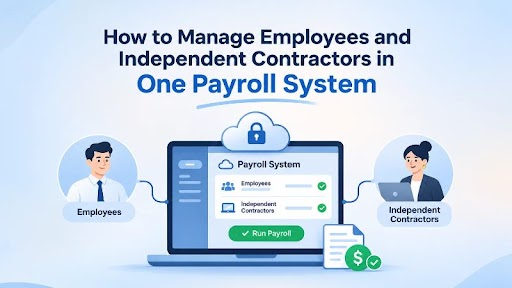
Choose real estate payroll software that handles both worker types: employee payroll with tax calculations and contractor payments with 1099 support. Check that it can process bonuses and commissions as separate payments, organizes payroll records, and publishes clear pricing.
Also ask where commission splits are calculated. Brokerages often work out splits in a transaction or accounting system and pass the final amount to payroll, so confirm what a vendor calculates.
How PayProNext Can Support Brokerage Payroll Needs
PayProNext is a U.S. payroll solution for businesses that need to manage employee payroll, payroll calculations, and payroll records. Its plans include employee and contractor management, payroll reports and records, and human support. The Full Service plan adds federal, state, and local tax filing, W-2 and 1099 filing, and direct deposit management. Pricing is posted publicly, with no hidden fees and a free first month.
PayProNext is a payroll solution, not a real estate commission management system. Brokerages calculate final commission amounts first, then run them through payroll.
Brokerage owners and managers can explore PayProNext or request a demo at https://www.paypronext.com
Frequently Asked Questions
How are real estate agents paid?
Most agents are paid a commission when a transaction closes, based on a split with the brokerage. Some brokerages pay a base salary plus commission, and support staff is typically salaried or hourly.
Do real estate agents receive a regular paycheck?
Usually not. Commission-only agents are paid when deals close and funds are disbursed. Agents who are employees on a salary or base pay may receive regular paychecks.
Are real estate agents employees or independent contractors?
It depends. Licensed agents can be statutory nonemployees for federal tax purposes if IRS conditions are met, but state law and the real working relationship still matter. A contract label alone doesn’t decide it.
How does commission-based payroll work?
The brokerage calculates the agent’s share after a closing. For contractors, it pays that amount and reports it on Form 1099-NEC. For employees, it processes the commission as wages with tax withholding.
How do real estate companies pay salaried employees?
Through regular payroll runs: a fixed amount each pay period, less withholding and deductions, reported on Form W-2. Overtime eligibility depends on whether the role is exempt under the FLSA.
How should real estate brokers manage payroll?
Classify workers carefully, keep employee and contractor payments separate, document commission and fee terms in writing, retain required records, and use payroll software that supports both worker types.